
Project Case Study
Two Phase Separator
Advanced Separation
Gas Separator
Utilizing gravity settling and advanced internal components to deliver clean gas and liquid streams in a compact vessel design.
High Efficiency
Cyclone technology removes up to 99% of solids, protecting downstream equipment and enhancing process efficiency.
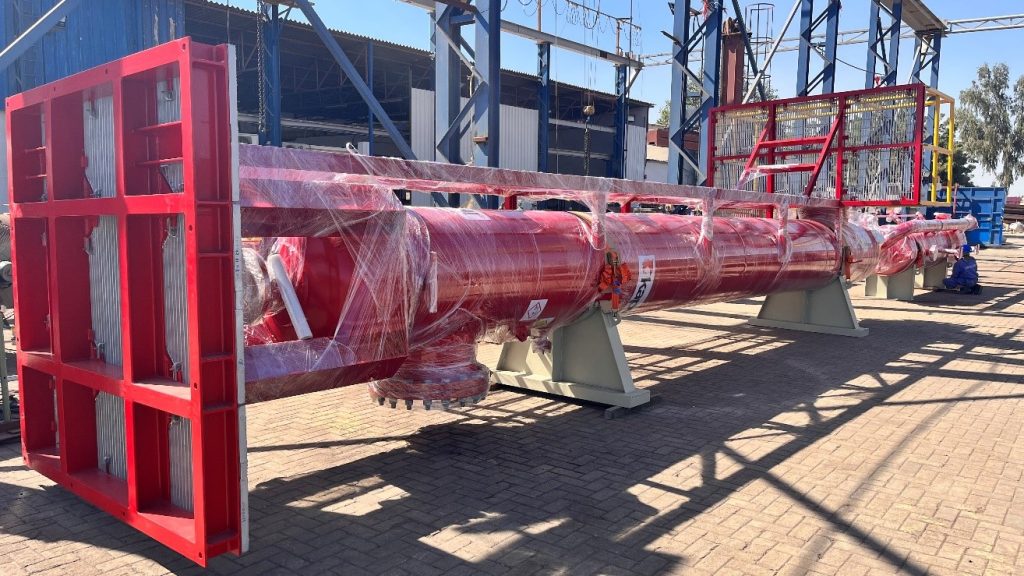
Overview
Kapwell was engaged to design an advanced two-phase separator for a confidential client’s process. The separator’s role was to divide a mixed stream into gas and liquid with a high degree of purity in each output. The project required a compact vessel design because of space constraints, yet it needed to achieve exceptional separation efficiency to improve the quality of both gas and liquid phases. The context of the application is not disclosed (due to NDA), but it demanded reliable operation and compliance with industry pressure vessel standards.
Solution
Kapwell developed a custom two-phase separation vessel equipped with gravity settling zones and advanced internal components. Within the separator, an inlet diverter calms the incoming flow, after which gravity separation allows bulk liquid to settle out from the gas. The gas then passes through high-efficiency internals – such as vane packs or demisting cyclones – that coalesce and remove fine droplets, ensuring the gas leaving the vessel is very dry. The liquid phase is simultaneously collected and discharged with minimal gas entrainment. Despite its compact size, the separator was engineered to handle the required flow rates and pressure, utilizing every inch of vessel volume effectively. All design and fabrication were done to meet relevant codes (e.g., ASME and PED), and the unit was prepared for hazardous area operation (ATEX-rated) in line with Kapwell’s standard practices.
Key
Features
High-Efficiency Internals
The separator includes specialized internals that significantly boost separation performance. For example, cyclonic mist eliminators and coalescer packs inside the vessel enable removal of 99% of entrained solids and liquid droplets from the gas stream. This results in a clean, dry gas output and a liquid output free of fine gas bubbles.
Compact, High-Capacity Design
The vessel was designed to maximize separation within a small footprint. Optimized geometry and internals allow it to handle the required throughput while remaining smaller than conventional separators. This was crucial for the client’s space-limited installation. The design provides clean gas and liquid streams in a single compact unit.
Robust Construction & Compliance
Fabricated with high-grade materials to withstand operating pressures, the separator is built for pressure integrity and safety. It adheres to CE/UKCA marking and ATEX requirements (for use in explosive atmospheres) like all Kapwell separators, ensuring compliance with European safety standards. (While specific certifications are not detailed due to NDA, Kapwell’s general compliance covers UKCA, PED, CE, etc.)
Instrumentation and Control
The separator skid was delivered with integrated level controls, pressure relief devices, and instrumentation to maintain optimal separation levels. Automated control of liquid level and pressure within the separator ensures stable operation and protects against upset conditions.
Challenges & Innovation
The project’s confidentiality means many details remain undisclosed, but technically, one of the biggest challenges was achieving high separation efficiency in a constrained space. Kapwell’s innovative approach involved the use of advanced internal components (like cyclone demisters) usually found in larger separators, scaled and arranged to fit the smaller vessel. This creative internal design allowed performance targets (such as 99% removal of fine particles) to be met or exceeded. Another challenge was integrating this separator into the client’s process without extensive rework; Kapwell addressed this by custom-positioning nozzles and supports to match the existing infrastructure. Innovation in design optimization (using in-house process simulation and CFD analysis) was key to ensuring that even with the reduced size, the separator would not compromise on throughput or efficiency.
Client Benefit
Improved Product Quality
The client now achieves clean separation of gas and liquid phases, which means the gas is much drier and the liquid has far fewer gas bubbles. This improves downstream process performance and product quality, as equipment receiving the separated streams can operate under optimal conditions.
Protected Downstream Equipment
With 99% of entrained solids and liquids removed from the gas, downstream compressors, turbines, or burners are protected from fouling and corrosion. This increases the reliability and lifespan of those units.
Space and Cost Savings
By providing a compact separator, Kapwell enabled the client to install the unit in a space where a standard separator might not fit. This saved the client from expensive structural modifications. The efficient design also means lower weight, which can reduce support structure costs.
Confidential, Customized Solution
The client benefited from Kapwell’s ability to customize the design under confidentiality. They received a bespoke solution tailored to their process needs, delivered discreetly. The trust built through this NDA-protected project means the client got the solution they needed without compromising their competitive or proprietary information.
Timeline
Delivered on schedule. Kapwell completed the two-phase separator project within the agreed timeframe (timeline details are confidential). The project stayed on track through close coordination and by expediting critical design decisions early. Delivery on schedule allowed the client to install the separator during their planned outage with no delays.