
Project Case Study
Mist Eliminator
Advanced Separation (Oil and Gas North Sea
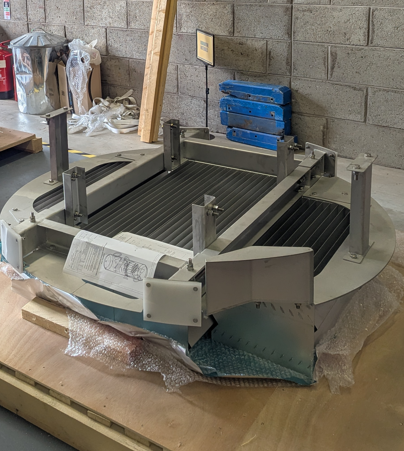
Multi-stage chevron
Incorporating optimized chevron blade geometry for effective interception and drainage of liquid droplets.
High Efficiency
Cyclone technology removes up to 99% of solids, protecting downstream equipment and enhancing process efficiency.
Innovative
Optimized chevron profiles to maximize droplet capture and drainage..
Overview
Kapwell was contracted to provide an advanced mist elimination system for an offshore oil & gas facility in the North Sea. The facility faced challenges with fine liquid droplets entrained in gas streams, which could lead to equipment fouling, inefficiencies, and potential emissions issues. The objective of this project was to design a mist eliminator unit that could capture these fine droplets (aerosols) and ensure that the gas exiting into the atmosphere or into downstream equipment was practically dry. The project needed to account for offshore conditions, including space constraints, salt-laden air, and the need for robust, low-maintenance operation.
Solution
Kapwell’s solution was a multi-stage chevron mist eliminator installed within an existing separator vessel. This mist eliminator uses specially engineered chevron blades (vane packs) that force the gas to zigzag through narrow channels. As the gas changes direction sharply, liquid droplets cannot follow as easily and collide with the blades, coalescing and draining away. The design implemented by Kapwell involved optimized chevron blade geometry to maximize the capture of droplets while allowing the gas to flow with minimal pressure drop. Additionally, Kapwell incorporated a second stage – such as a fine mesh pad – downstream of the chevrons to catch any remaining ultra-fine mist. The entire system was housed in a removable cartridge for ease of installation and maintenance in the offshore separator.
Key
Features
Multi-Stage Droplet Removal
The mist eliminator features two stages of separation – first, a vane pack (chevron stage) that captures the bulk of the liquid droplets, and second, a fine coalescing stage for the smallest mist particles. This multi-stage design achieves a very high overall efficiency of droplet removal, ensuring extremely dry gas output.
Optimized Chevron Blades
Kapwell developed optimized chevron profiles specifically for this project, improving interception and drainage of liquid droplets. The blade spacing, angle, and surface features were tailored so that droplets as small as a few microns are effectively caught when the gas flows through the pack. This is an innovative design element that significantly exceeded the performance of standard mist eliminators.
99%+ Removal Efficiency
The system is capable of removing over 99% of entrained liquids and even fine solid particles from the gas stream. By preventing carryover of liquids, it protects downstream equipment (like compressors, turbines, or burners) from moisture-related damage and also reduces oily emissions to the environment.
Offshore-Grade Construction
All materials for the mist eliminator were chosen for offshore durability – stainless or alloy materials resist corrosion from salt air and sour gas. The unit was designed to fit into the existing vessel manway for installation, addressing the space and access constraints on offshore platforms. It is also engineered to require low maintenance (with self-draining features for the coalesced liquids), which is critical in an offshore setting.
Challenges & Innovation
The critical challenge was capturing extremely fine mist (sub-5-micron droplets) at high gas flow rates, something not easily achieved with conventional separator internals. Kapwell tackled this by innovating the chevron blade design, using computational modeling to refine how the blades collect tiny droplets. The resulting design had an increased surface area and strategic curvature, dramatically improving efficiency. Another challenge was ensuring the modification could be made with minimal process downtime – this was solved by delivering the mist eliminator as a modular insert that could be installed during a brief shutdown. Kapwell’s team also had to consider offshore safety and constraints, which led to an innovation in using lighter materials and a sectional design (the eliminator could be brought in pieces and assembled inside the vessel). The project demonstrates Kapwell’s ability to push the envelope on separator internal design to meet tough performance targets.
Client Benefit
Significantly Drier Gas
The client now benefits from gas that is virtually free of liquid droplets, thanks to the >99% removal efficiency of the mist eliminator. This dramatically reduces issues like compressor blade erosion, acid formation, or corrosion that can occur if liquids carry over in the gas.
Improved Process Efficiency
By eliminating mist, downstream equipment operates more efficiently and with greater stability. For instance, gas turbines or burners receive consistent, dry fuel gas, which ensures optimal combustion and performance. The absence of liquids also means heat exchangers or coolers downstream stay clean longer, maintaining their efficiency.
Reduced Emissions & Compliance
The system helps reduce oily or chemical emissions from the facility. Any acid fumes or hydrocarbon mist that could have been emitted are now captured, aiding the facility in meeting environmental regulations and improving air quality around the platform.
Lower Maintenance & Safer Operations
With the mist eliminator in place, there is less frequent need to clean downstream equipment and fewer unplanned shutdowns due to fouling. This lowers maintenance costs and reduces the safety risks associated with opening equipment for cleaning. Overall, the solution contributes to a safer, more reliable operation on the offshore platform.
Timeline
Delivered on time. The mist eliminator was designed, fabricated, and installed within the planned project schedule. The installation was synchronized with a routine maintenance shutdown offshore, and Kapwell completed the work on schedule, allowing the platform to resume production without delay.